
Huawei Mate 20 Pro Smartphone Review
Live test: First impressions
The Huawei Mate 20 Pro’s spec sheet is littered with flagship level
hardware including the new Kirin 980 SoC, the currently fastest LTE
modem in a consumer smartphone, reverse wireless charging and a
fingerprint sensor underneath its display. This review will be putting
all this new hardware and more through its paces to determine whether
the Mate 20 Pro’s technical prowess translates into real-world
performance.


The
Mate series has always been Huawei’s showcase smartphones. Previous
Mate devices have been the first to receive the company’s latest
innovations except for camera-related hardware, which Huawei has
reserved for the P-series.
The lack of cutting-edge hardware let the Mate 10 Pro
down, but no criticism could be leveled at its successor. The Mate 20
Pro has a 6.3-inch display with Huawei finally opting for a 1,440p panel
rather than the 1,080p panel that they used in the Mate 10 Pro.
Likewise, the Mate 20 Pro sports the brand-new HiSilicon Kirin 980 SoC,
which Huawei manufacturers on a 7 nm FinFET process and promises will
outperform the Apple’s latest A12 Bionic SoC. The fingerprint sensor is also now underneath the display as we have seen with the Vivo NEX Ultimate or the Xiaomi Mi 8 Explorer Edition. Previously, Huawei had reserved this technology for its Porsche Edition devices.
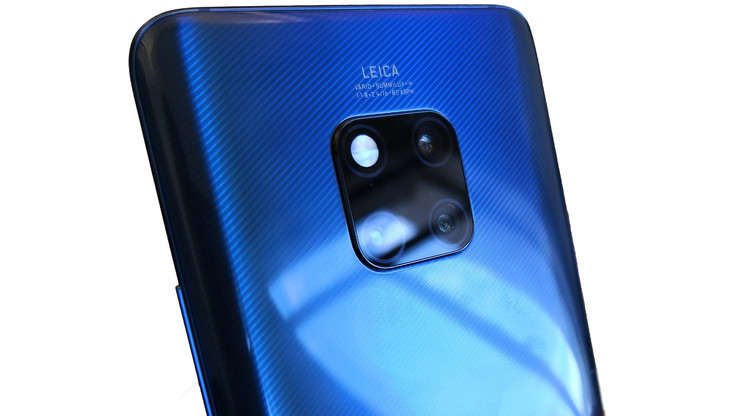
The Leica-branded triple rear-facing camera looks like the one in the P20 Pro
at first glance, but Huawei has added a wide-angle lens in favor of the
monochrome sensor. The camera should also have great macro-performance
thanks to its five-times optical zoom. The focus of the Mate 20 Pro’s
cameras is undoubtedly the 40 MP rear-facing sensor, which should share
all the great qualities of the P20 Pro’s main rear-facing camera. The
Mate 20 Pro also flexes its muscles with its currently world-beating
Cat. 21 LTE modem, Bluetooth 5.0 support, its NFC chip and its fast MIMO
Wi-Fi. Huawei has also included a 4,200-mAh battery, which supports
wired or wireless charging and is 200 mAh larger than its predecessor’s.
We have chosen to compare the Huawei Mate 20 Pro against other large flagship smartphones including the Apple iPhone XS, HTC U12+, LG G7 ThinQ, OnePlus 6, Nokia 8 Sirocco, Samsung Galaxy Note 9 and the Sony Xperia XZ2 Premium.
This is a live review, which we will expand upon in due course.
10.16.2018: First impressions and photos.
Huawei Mate 20 Pro (Mate 20 Series)
Processor
HiSilicon Kirin 980, Dual-Core NPU
Graphics adapter
ARM Mali-G76 MP10, GPU Turbo 2.0
Memory
6144 MB , LPDDR4x
Display
6.3 inch 13:6, 3120 x 1440 pixel 545 PPI, Capacitive touchscreen; ten point multitouch, OLED, HDR, glossy: yes
Storage
128 GB UFS 2.1 Flash, 128 GB , 112.8 GB free
Connections
1
USB 3.0 / 3.1 Gen1, 1 HDMI, 1 DisplayPort, Audio Connections: USB
Type-C, Card Reader: Nano-Speicherkarte (bis zu 256 GB), 1 Fingerprint
Reader, NFC, Brightness Sensor, Sensors: Näherung, digitaler Kompass,
Gyroskop, Beschleunigung, Hall, Infrarot, Laser, Farbtemperatur, OTG
Networking
802.11 a/b/g/n/ac (a/b/g/n/ac), Bluetooth 5.0, GSM/GPRS/Edge, UMTS/HSPA+, LTE Cat. 21, Dual SIM, LTE, GPS
Size
height x width x depth (in mm): 8.6 x 156.9 x 72.4 ( = 0.34 x 6.18 x 2.85 in)
Battery
4200
mAh Lithium-Polymer, Huawei Super Charge - 40 W, Qi wireless charging,
Talk time 2G (according to manufacturer): 41 h, Talk time 3G (according
to manufacturer): 30 h, Standby 2G (according to manufacturer): 502 h,
Standby 3G (according to manufacturer): 555 h
Operating System
Android 9.0 Pie
Camera
Primary
Camera: 40 MPix Main Camera: 40 MP, f/1.8. Ultra-wide-angle sensor: 20
MP, f/2.2. Telepohoto sensor: 8 MP, f/2.4, OIS. Dual-tone LED flash, AI
support.
Secondary Camera: 24 MPix
Secondary Camera: 24 MPix
Additional features
Speakers:
Stereo speakers, Keyboard: Virtual keyboard, SuperCharge-Netzteil,
USB-Kabel, Headset, SIM-Werkzeug, Kurzanleitung, EMUI 9.0, 24 Months
Warranty, SAR: 0.4 W/kg, IP68-Zertifizierung, fanless
Weight
189 g ( = 6.67 oz / 0.42 pounds) ( = 0 oz / 0 pounds)
Price
999 Euro
Links
Note:
The manufacturer may use components from different suppliers including
display panels, drives or memory sticks with similar specifications.
No comments